ENTERPRISE SYSTEMS · DESIGN & RESEARCH
Untangling the complex. Connecting the workflow.
Making intake, investigation, and communication clearer across 10 regulatory investigation teams.
The challenge
This work covered intake, investigation, and communication across 10 investigation teams. Multiple roles, systems, approvals, and recordkeeping requirements made it more than a form-redesign problem.
My role
I was the sole product designer and contributed research, collaborating with product management, engineering, data architecture, and investigation teams. Personas, user flows, and stakeholder mapping helped clarify how responsibilities connected.
Phase one: make intake easier to complete
The first phase addressed guided forms, contact-information automation, and multi-file uploads. A key tradeoff was between the familiarity of progressive disclosure and the reduced prerequisite knowledge offered by typeahead. Typeahead also brought learning and data-cleanup costs.
Phase two: make the common path visible
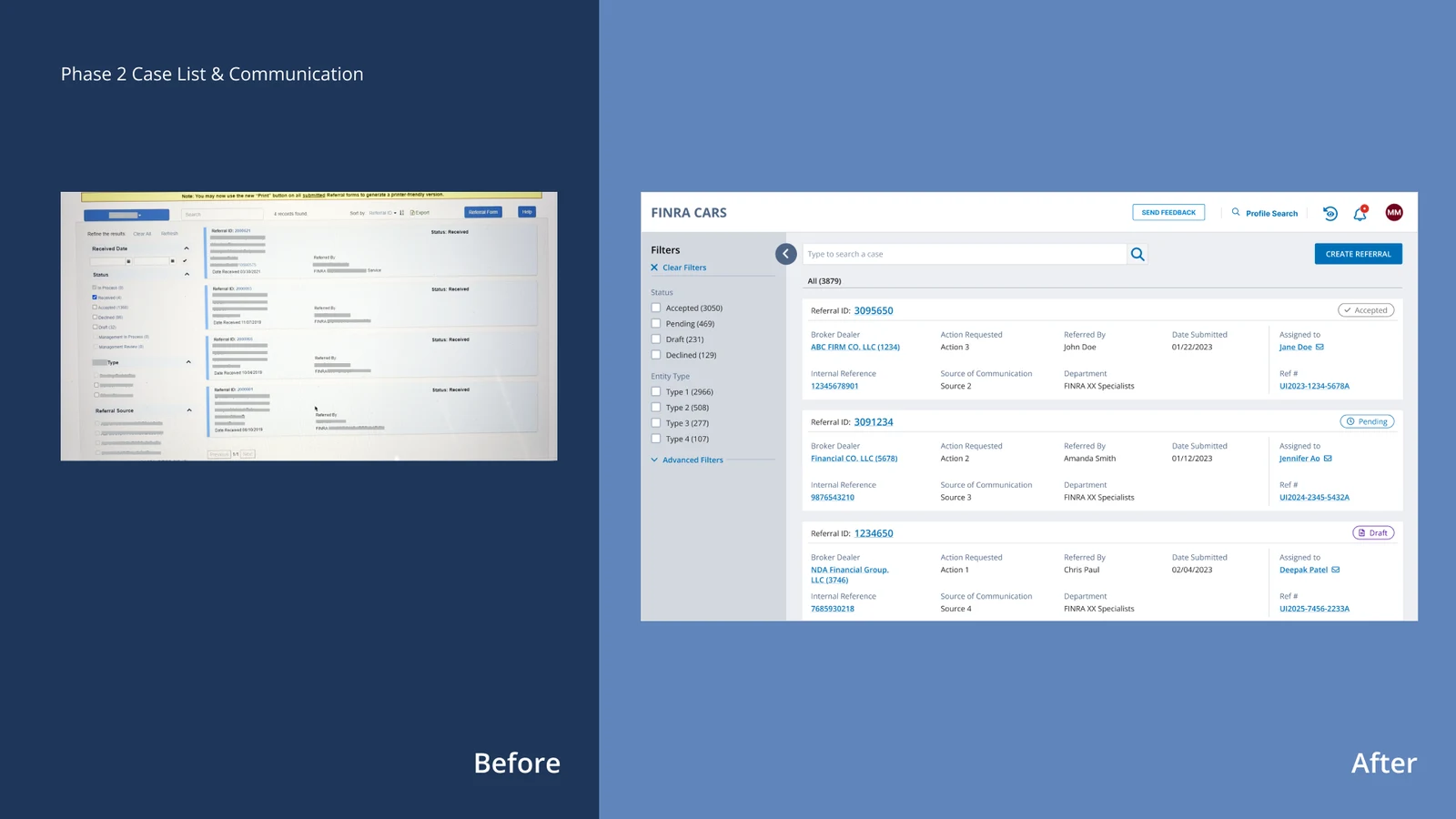
The case list prioritized Status and Entity Type filters, while moving more than 60 less-used filters into Advanced Options. Referral cards, status, read-only submission records, supplemental information, and comments made the investigation context easier to follow.
Connect communication to the case
The workflow brought communication history and supplementary information back into the case context. The goal was continuity across handoffs, with records that teams could refer to as work progressed.
Results and next questions
The source case records improvements in completion time, accuracy, and communication capture. Their measurement definitions differ, so they should not be combined into one overall efficiency claim. A subsequent phase involved early research with three business analysts, three investigators, and three supervisors, supported by a service blueprint; it was not presented as a shipped third phase.